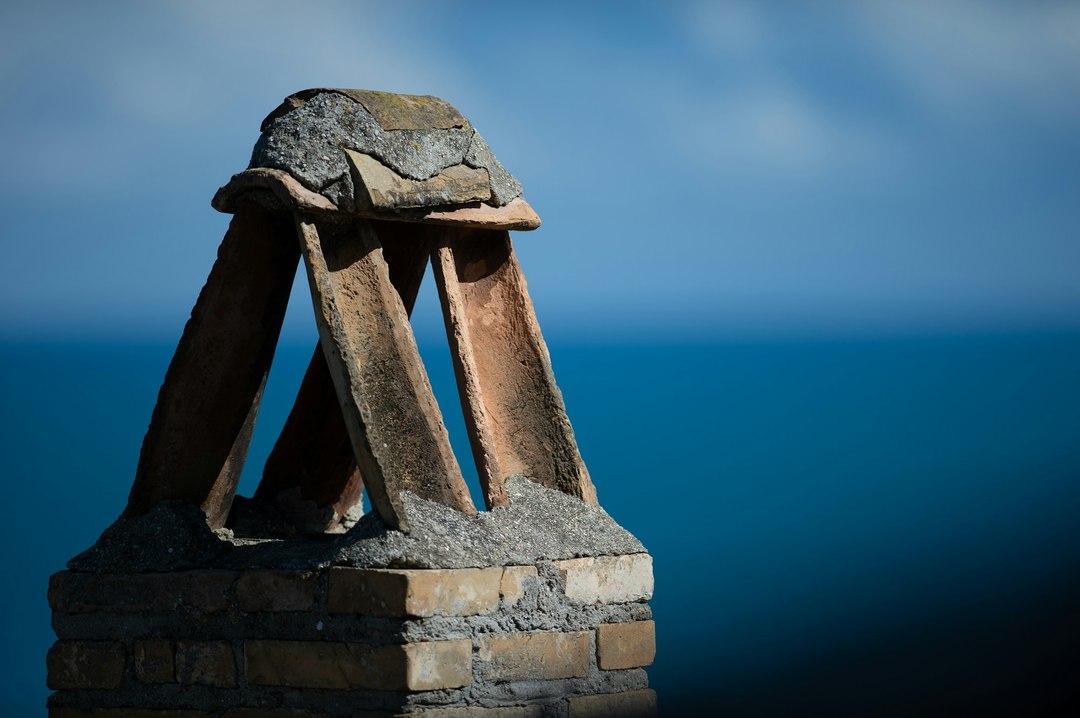
Homeowners in El Monte often ask whether a chimney sweep costs less in spring than in October. Our price does not move with the season: a sweep starts from $420 in March, in July and in the week before Thanksgiving. What the calendar changes is the state of the flue when we arrive, and that is what decides whether the visit stays at the base price or picks up other lines.
What the base sweep pays for
The base price buys a full brushing of one flue from the firebox to the top, with the soot pulled into a sealed vacuum so it does not drift across the living room. Drop cloths go down at the hearth before anything is opened. We clear the smoke shelf behind the damper, work the damper through its full swing, and look over the firebox walls and the cap while we are up on the roof. You get a written note of what we found, including anything worth watching before next winter.
That covers a fireplace burned at a normal pace: a few fires a week through the cold months, seasoned hardwood, a damper that opens and shuts.
Why the month of the visit changes the bill
The price holds still. The work inside the flue does not. This is how the year usually runs for a wood fireplace in the San Gabriel Valley.
March to May: right after the burning stops
Spring is the cheapest time to learn anything about a chimney, because everything from the winter is still in the flue. Soot from December and January is dry and loose, so it brushes out without fuss. If slow, smoky fires left a hard shiny coat on the tiles, a spring visit finds it while you still have six months to deal with it, instead of a week before the first cold night.
Spring is also when the roof tells us about the rains. Water that came in around the crown or the flashing in February leaves marks we can read.
June to August: the slow months
Summer suits anyone who wants a choice of dates. Roofs are dry, nobody is waiting on a fire, and any repair we flag can be scheduled with room to spare. The one summer surprise is wildlife. A flue with no cap is an open door for birds and the odd raccoon, and a nest adds clearing time. That is priced on its own, and only after we have shown you what is up there.
September to October: the rush
Every year, the first cool evening sends a wave of calls. The sweep price is the same, but the calendar fills, and a fireplace that went unswept through spring now carries a full year of soot plus whatever blew in over the summer. If you can, book in August.
November to February: burning season
A mid-season sweep makes sense for houses that burn every night, or when a fire that used to draw well starts to smoke into the room. These are also the months when the South Coast air district calls no-burn days during stagnant weather, so many households burn less anyway. If you burn heavily, a sweep in January plus one in spring keeps buildup from hardening.
Lines that can be added to a sweep
The base sweep is one flue. These are the usual reasons a bill comes out higher, and none of them go on without your say:
- A second fireplace or a wood stove on its own flue, swept as its own job
- Hard, tar-like buildup that brushing will not lift, quoted in writing once we see how much there is
- A camera run if something in the flue looks wrong; the full Level 2 inspection is $390
- A nest or a debris plug, priced after we show you the picture from the flue
- A cap that is missing or rusted through; a new one fitted to the flue is quoted after we measure
If the sweep turns up a cracked tile or water damage at the crown, we write it down and price it as a separate job. You decide when it happens.
What decides the price before we arrive
Three things settle most of the bill before our truck pulls up: how many flues the house has, how long since the last sweep, and whether the chimney has a cap. A house in El Monte with one fireplace, swept two springs ago and capped, is almost always a base price visit. A house with two fireplaces, no cap and no known history will likely carry a line or two more.
To get a written figure ahead of the visit, request a sweep price through the form and tell us how many fireplaces you have, roughly when the last sweep was, and whether you burn wood or gas. We call back with the likely total and a date.
A simple year for one wood fireplace
For a household that lights a fire a few nights a week in winter:
- April: sweep and roof check while the winter soot is fresh
- July or August: fix anything the spring visit flagged
- October: a look at the damper and cap before the first fire, only if spring found a problem
- January: a second sweep, only if you burn most nights
A gas fireplace usually needs one visit a year, and late summer suits it; our gas fireplace cleaning page lists what that visit covers. If you are weighing whether this year calls for a camera as well, our post on choosing between a Level 1 and a Level 2 sorts it by season.
Nearby cities
The same pricing applies across our service area, including West Covina, Monrovia and Sierra Madre. Hillside lots in Sierra Madre can need more ladder work to reach the roof, but the sweep itself starts at the same figure.
More detail on the visit itself sits on our chimney sweep page. Once you know which month suits your house, pick a date on our contact page and we will hold it for you.
Ready to Plan Yours?
Hackett Chimney Contractors books chimney work from El Monte by season. Pick the month, get the price on paper, and keep the photo report for next year.