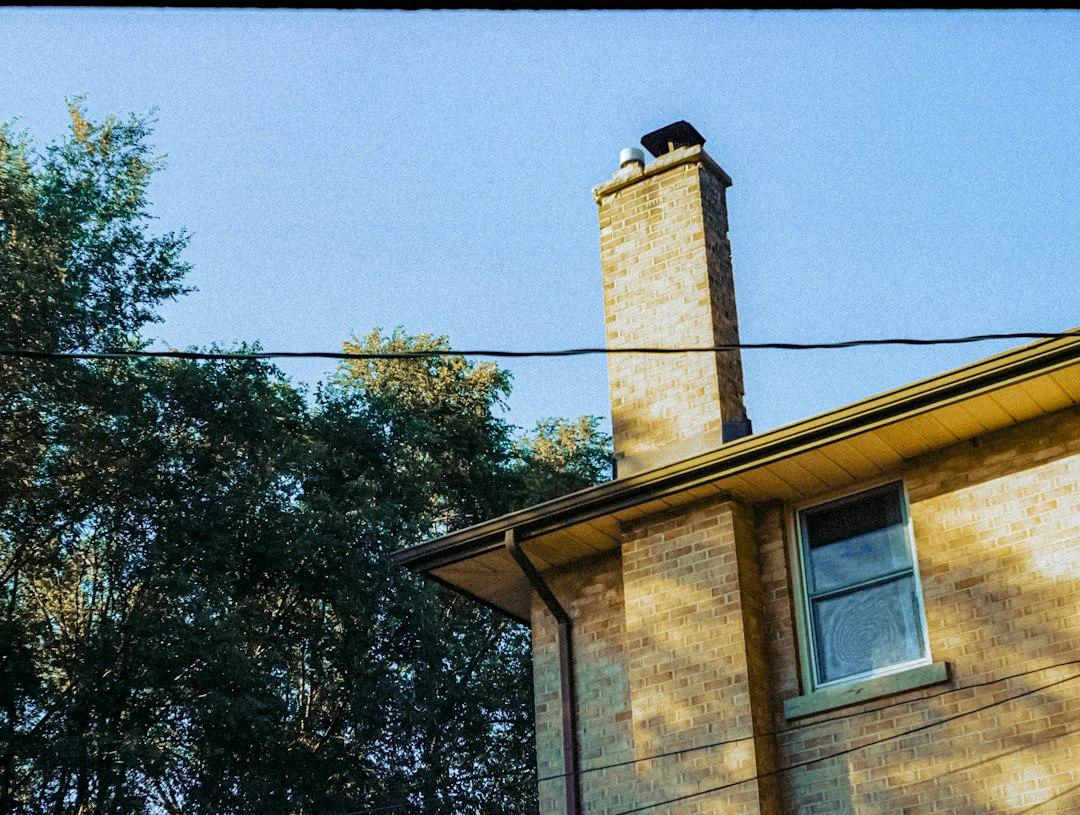
A cracked flue tile is the kind of finding that arrives at the worst moment: on a camera screen in October, two weeks before you planned the first fire. For many El Monte households the right answer is a new liner, and the right time to install it is the stretch of the year when nobody is burning. This post covers what a liner job involves, what moves its price, and how to plan it around the season.
Why the flue tiles matter
Many brick chimneys in the San Gabriel Valley were built with clay tiles stacked inside the masonry. They keep heat and exhaust in a smooth channel and protect the brick and the framing around it. When a tile cracks, shifts at a joint or loses a piece, hot gas and creosote reach places they should not. A fire can still look normal from the room.
Tiles fail for a few common reasons here. Past quakes, including the 1987 and 1991 shaking that hit this part of the county, cracked and offset many of them. A chimney fire can split them top to bottom. And decades of winter storms falling straight down a chimney with no cap slowly eat the mortar between them.
None of that shows from the firebox. It is a camera finding, which is why the Level 2 inspection, $390 with us, comes before any liner price.
The liner options
There are three common ways to give a damaged chimney a working flue again:
- Stainless steel liner. A round, flexible or rigid steel pipe run from the top of the chimney down to the smoke chamber or the appliance, often wrapped in insulation. It is the usual choice for wood stoves, inserts and many gas appliances.
- Cast-in-place liner. A form is set in the old flue and a cement mix poured around it, filling cracks and gaps as it cures. It suits chimneys with an odd shape or heavy damage.
- New clay tiles. Replacing tiles is possible where the stack is being rebuilt anyway, though it means opening the chimney.
The fuel matters. Wood, gas and pellet appliances each need a liner sized and rated for them. A liner that suits a gas furnace is not the right one for a wood fire.
Insert or liner?
For an open wood fireplace with a badly cracked flue, some homeowners skip the open fire and put in a gas unit with its own vent pipe running up the old chimney. That solves the flue and the smoke in one job. Set into the firebox you already have, a gas insert costs $2,800 to $5,600 with us, installed. We price both paths when the cost of relining an open fireplace comes close to the insert.
Why the off season is the right time
Liner work needs the fireplace out of use, a dry roof and room to wait for parts sized to your flue. All three are easy between March and August. Plan it this way:
- Spring: book the Level 2 right after the last fire, while any damage from the winter is fresh
- Late spring: receive the written quote, decide between liner types or an insert
- Summer: install, with dry weather for the roof work and the chimney cap refitted on top
- Early fall: first fire with the new liner, before the rush of sweep calls
A cracked flue found in October still gets fixed, but the gap between finding and fire is shorter and the waits for materials are longer. In the meantime the fireplace stays cold, which is a hard thing to accept in the one season you wanted it. Booking the camera in spring is what keeps that from happening.
What decides the liner price
Liner installation is quoted in writing after the camera run, because no two chimneys take the same job. What moves the figure:
- The height of the chimney and the size of the flue opening
- Whether the run is straight or has offsets the liner has to follow
- The fuel and appliance it will serve
- Whether insulation is needed to bring the clearances up to code
- Damage at the smoke chamber or the damper that has to be fixed at the same time
- Roof access and pitch
Once the camera report is in hand, ask for a written liner quote and tell us what the report found and what you burn. We call back to confirm the measurements on site and give you the figure.
Work that often goes with it
A liner job is a good moment to fix what sits around it. A damper that sticks or warps can be replaced with a sealing top damper, which closes at the top of the liner. A worn crown gets a new pour or a reseal. And the cap goes back on fitted to the new liner. Each of these is quoted on its own line, so you can choose.
For homes in the foothill cities, where the 1991 quake is still remembered, homeowners sometimes pair relining with seismic bracing for the upper part of the stack. Our chimney seismic retrofit page describes those options.
Related pages
- Chimney liner installation
- Chimney damper repair
- Level 2 chimney inspection
- Choosing between a Level 1 and a Level 2
We reline chimneys across El Monte and nearby cities, including Sierra Madre, Monrovia and West Covina. If the camera has already found cracks, reach us through the contact page and we will plan the work for the quiet months.
Ready to Plan Yours?
Hackett Chimney Contractors books chimney work from El Monte by season. Pick the month, get the price on paper, and keep the photo report for next year.