
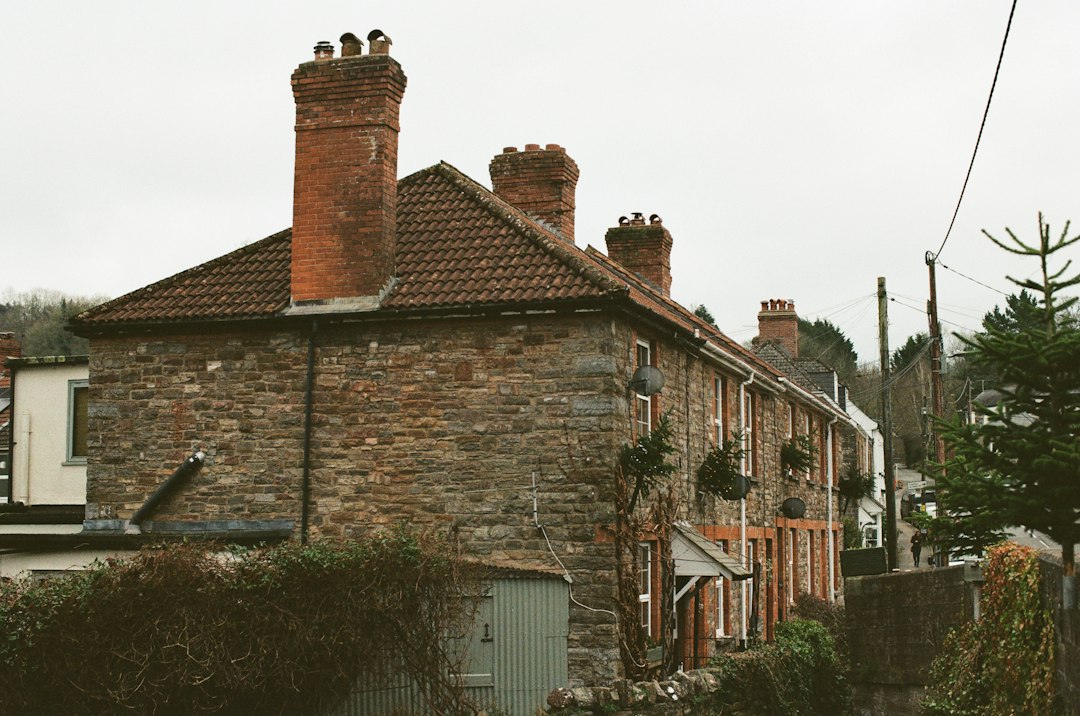
Close the Top of the Chimney Before November
Plan Your Chimney Crown Repair
Tell us the address, the fireplace type and roughly when you would like chimney crown repair done. We confirm a date in that window.
What This Booking Covers
The crown is the first part of a chimney to meet rain. Summer heat and winter wet make it shrink and swell until hairline cracks open, and water then travels into the brick and the flue. Hairline damage takes an elastic coat brushed on in dry weather. Once the cement has split into pieces, we pour a new crown that overhangs the brick. We look at it from the roof, photograph it and write the price down. Late summer is the time to book.
How a Crown Fails Over a Few Seasons
Look at your chimney from the street and the gray band on top, around the clay tile, is the crown. It covers the top of the brick so rain lands on cement instead of soaking down into the joints. Plenty of crowns on older houses were troweled on from leftover mortar on the day the chimney was topped out, thin at the edges and flat on top, and those crack early. Summer sun heats the top of the crown hard while the brick below stays cooler, the crown shrinks and swells a little every day, and hairline cracks open. Winter rain then fills the cracks and washes their edges out. Within a few seasons the cracks reach the brick, and from there water travels down through the stack, rusts the damper, stains the ceiling and loosens bricks near the top. A crack that started as a hairline in July can be a leak by February.
On the roof we sort the crown into one of two piles. Fine cracks in cement that is still well attached and the right shape can be sealed with a crown coating made for the purpose, which stays elastic and keeps rain out of the cracks. A crown that has broken into pieces, lifted off the brick, or was never shaped to throw water off needs to be removed and replaced. A new crown is formed to slope away from the tile, overhangs the brick by a couple of inches with a groove cut underneath so water lets go before it reaches the brick face, and leaves a gap at the tile packed with a pliable filler, since clay that heats up grows. Both options are written into the quote with the materials and the steps, so you can choose with the price and the expected life of each in front of you.
The Crown Calendar: Inspect in Spring, Repair by Fall
Crowns are easy to miss because nobody sees them from the yard, so the calendar has to bring them up. In spring, after the rains, a Level 1 inspection or a sweep is the time to have the crown looked at, since any cracks that grew over winter are fresh and any leaks inside are still visible. Between May and September is when the repair belongs. Coatings need dry cement and a few rain-free days to set, and a new crown needs time to cure before it faces a storm. On the hottest days we work early and shade the fresh cement, since crown mix that dries too fast loses strength. October is the last comfortable month. A crown repair that slips into December often has to wait for a dry week, and every storm in between keeps pushing water into the brick.
A crown repair is also a good moment to deal with what sits on and around it. A cap goes on more securely over a new crown, and an installed cap is quoted after we measure. If the top few courses of brick have loosened under the old crown, repointing them before the new crown is poured keeps the repair from sitting on a weak base. If the chimney leaks, a water test after the crown is done tells us whether the crown was the only path. And if the stack is old and tall, as many are in Sierra Madre and Monrovia, it is worth asking about bracing while the top of the chimney is being rebuilt anyway. The quote lays each of those out as separate lines, so this summer's work and next summer's can be split however suits your budget.
The Hackett Chimney Contractors Way of Booking
Timed to the Season
Each job goes in the month that suits the weather and your use
Covered Floors
Drop cloths from the door to the hearth on every visit
Price on Paper
Every figure is written down before anything is booked
Next Visit Noted
The report ends with the month we suggest coming back
Where we book chimney crown repair
Our four core cities carry their own page for this service, covering the homes, the weather and the months that suit the work there.
This one is booked from the main service page. The city list shows every place we cover.
More Services
Chimney Sweep
A yearly flue cleaning, ideally booked in late summer, that removes last winter's soot and creosote before the first fire of fall.
When to book it →Chimney Inspection
A seasonal check of the flue, damper, crown and cap before the burn months, so any repair is planned rather than rushed.
When to book it →Chimney Repair
Repairs to brick, mortar, crown and flue, scheduled for the dry months so the work cures before rain and fires return.
When to book it →Fireplace Inspection
After the summer break we check the hearth, the damper and the firebox walls, so rust and cracked brick turn up before the first fire.
When to book it →Fireplace Repair
Firebox, damper and hearth repairs planned in the weeks before the holidays, when most households want the fireplace working.
When to book it →Chimney Level 2 Inspection
A video scan of the whole flue plus attic and roof checks, booked for a sale, a quake, a chimney fire or a new appliance.
When to book it →Chimney Cap Installation
A cap and spark screen fitted before the rain and wind months, keeping water, animals and embers out of the flue.
When to book it →Chimney Flashing Repair
Resealing the roof-to-chimney joint in late summer, so the first heavy storm of the year finds nothing to leak through.
When to book it →Chimney Masonry Repair
Brick and mortar work booked between spring and early fall, out of the rain, so repairs cure fully before burn season.
When to book it →Chimney Rebuilds
Partial or full rebuilds planned in spring, with permits and dry weather on your side, so the chimney is ready by fall.
When to book it →Fireplace Cleaning
A firebox cleanout at the end of winter or the start of fall, clearing ash, soot and smell from the hearth.
When to book it →Gas Fireplace Cleaning
An early-fall cleaning for gas units that sat through summer, clearing dust from the burner and film from the glass.
When to book it →Gas Fireplace Repair
Diagnosing and fixing gas units before the first cold week, so parts have time to arrive while the fireplace is not needed.
When to book it →Fireplace Remodel
Surround, hearth and mantel projects started in spring, giving months for design and finish work before the fireplace is needed.
When to book it →Fireplace Inserts
An insert planned and fitted in summer, turning an open fireplace into a sealed heater before the cold months arrive.
When to book it →Pellet Stove Repair
Off-season repairs for pellet stoves after a winter of hard use, so the stove starts the next cold week without a fault.
When to book it →Wood Stove Repair
Spring and summer repairs for wood stoves, renewing seals and worn interior parts after a full season of loads.
When to book it →Gas Logs
A gas log set chosen and fitted in late summer, ready for the holidays when a fireplace sees the most use.
When to book it →Chimney Seismic Retrofit
Bracing or rebuilding a brick chimney so it is better able to ride out the next quake, planned for the dry months.
When to book it →Dryer Vent Cleaning
A yearly cleanout of the dryer duct, from the machine to the outside hood, that clears lint and shortens drying times.
When to book it →Chimney Liner Installation
A new stainless liner fitted in the off-season when the old flue is cracked or a new appliance needs its own vent.
When to book it →Chimney Leak Repair
Finding and fixing the source of water at the chimney, ideally in the dry months before the next storm proves it.
When to book it →Chimney Waterproofing
A breathable water repellent applied to sound brick in dry weather, cutting the water the chimney soaks up each winter.
When to book it →Chimney Damper Repair
Fixing or replacing a damper before the season so it opens fully for a fire and seals tight through summer.
When to book it →Chimney Chase Cover
Replacing the rusted pan on top of a framed chimney before winter, so water stops running into the chase.
When to book it →