
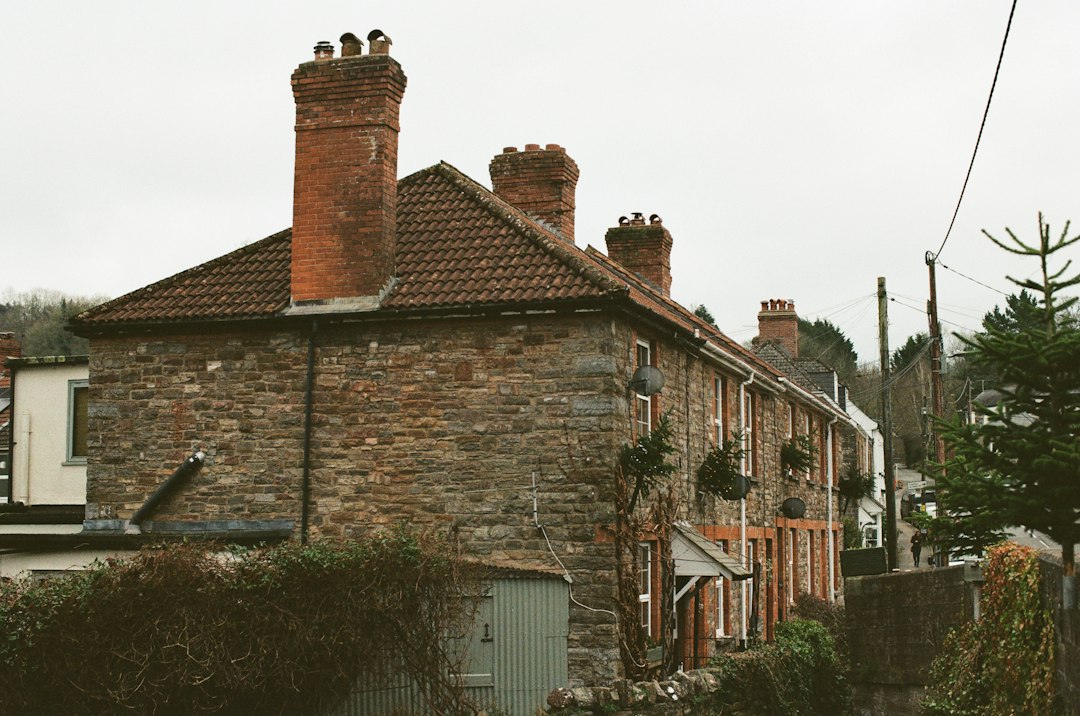
The Stain Shows Up in January. The Fix Belongs in June.
Plan Your Chimney Flashing Repair
Tell us the address, the fireplace type and roughly when you would like chimney flashing repair done. We confirm a date in that window.
What This Booking Covers
Leaks at the chimney rarely show in July. They appear with the first big rain in December, as a stain on the ceiling or damp brick in the attic. A dry-season roof check finds lifted metal, cracked sealant and rusted step pieces before that happens. We replace what has failed, recut the counter flashing into the mortar where needed, and price the job in writing once we have seen the roof up close.
Why Flashing Fails Between One Winter and the Next
Flashing has a hard job. The chimney is a heavy masonry column that barely moves, while the roof around it swells, shrinks and settles with every change of season. Summer heat in the valley bakes the shingles and the sealant at the edges of the metal. Winter rain then tests every joint that heat has opened. Most flashing failures we see come from one of a few causes: sealant smeared on in place of proper metal, which dries and splits within a couple of summers; counter flashing that was never cut into the brick and just glued to its face; a roof that was replaced around the old metal without new pieces; or a wide chimney with nothing behind it to steer water around the uphill side. The leak usually shows as a ceiling stain beside the chimney or a drip in the attic after the first heavy storm, and by then it has been soaking the wood for a while.
Repair starts with finding the actual path the water takes, because a chimney leak can come from the crown, the brick or the cap as well as the flashing. We look in the attic first for the wet wood, then on the roof for the gap that matches it, and run water over the suspect area if the source is not obvious. When the flashing is the cause, the right fix is new metal: short bent pieces tucked under each course of shingle up both sides, a second layer let into a sawn groove in the brick that laps over their top edges, and a proper apron along the low side. The flashing quote is written once we know what has to come off. A cricket behind a wide chimney is $445 to $1,005 on its own, or $670 to $1,650 with the flashing redone at the same time.
A Season-by-Season Plan for a Leaking Chimney
Leaks around a chimney follow the rain calendar, and so does the fix. In winter, the job is to note what you see: when the stain appeared, which storm made it grow, whether it drips during the rain or a day later. A drip during the storm points at flashing; a slow stain a day after points more often at water soaking through brick. Early spring, while the stain is still fresh and the attic wood still shows the path, is when we trace it. May through September is when we repair it, on a dry roof with sealants and mortar that can cure without rain. Waiting until the next winter to call means tracing a leak that has dried out and hidden its trail, or working the roof between storms. Owners who keep to that calendar usually go into the next rainy season with the leak gone and the ceiling patched.
Roofs matter to the timing too. If your roof is due for replacement in the next year or two, the flashing should be planned with the roofer so the new metal goes in with the new shingles, not before. If the roof is sound, flashing can be replaced on its own without disturbing more than the shingles right around the chimney. Tile roofs, common on older homes in Sierra Madre and Monrovia, need a little more care because the tiles around the chimney have to come off and go back without cracking. Flat and low slope roofs on some El Monte and West Covina homes take a different flashing detail again. Whatever the roof, we tell you which kind you have and quote for that roof, not a general one.
The Hackett Chimney Contractors Way of Booking
Timed to the Season
Each job goes in the month that suits the weather and your use
Covered Floors
Drop cloths from the door to the hearth on every visit
Price on Paper
Every figure is written down before anything is booked
Next Visit Noted
The report ends with the month we suggest coming back
Where we book chimney flashing repair
Our four core cities carry their own page for this service, covering the homes, the weather and the months that suit the work there.
CA
Chimney Flashing Repair in El Monte
Of El Monte homes, 20% predate 1950, and those fireplaces tend to vent through brick laid on site, where mortar wears thin. Our September visit sweeps the flue and checks every joint and the crown, leaving October open for any repair.
Open the city pageCA
Chimney Flashing Repair in West Covina
77% of West Covina homes date from before 1980, and most are detached houses. Book the sweep and inspection for August or September, ahead of the November through March rains that turn a split crown or tired flashing into a stain on the ceiling.
Open the city pageCA
Chimney Flashing Repair in Sierra Madre
Built before 1950: 30% of Sierra Madre homes, from long before today's seismic rules, so many brick chimneys here have little or no steel inside. Each one gets a fall inspection on our calendar, plus a second look after any quake.
Open the city pageCA
Chimney Flashing Repair in Monrovia
Monrovia has a fairly even split of renters and owners, and 28% of its homes are older than 1950. We run those brick and river rock stacks on a yearly loop: sweep and inspection in early fall, then a crown check once the spring rain is done.
Open the city pageMore Services
Chimney Sweep
A yearly flue cleaning, ideally booked in late summer, that removes last winter's soot and creosote before the first fire of fall.
When to book it →Chimney Inspection
A seasonal check of the flue, damper, crown and cap before the burn months, so any repair is planned rather than rushed.
When to book it →Chimney Repair
Repairs to brick, mortar, crown and flue, scheduled for the dry months so the work cures before rain and fires return.
When to book it →Fireplace Inspection
After the summer break we check the hearth, the damper and the firebox walls, so rust and cracked brick turn up before the first fire.
When to book it →Fireplace Repair
Firebox, damper and hearth repairs planned in the weeks before the holidays, when most households want the fireplace working.
When to book it →Chimney Level 2 Inspection
A video scan of the whole flue plus attic and roof checks, booked for a sale, a quake, a chimney fire or a new appliance.
When to book it →Chimney Cap Installation
A cap and spark screen fitted before the rain and wind months, keeping water, animals and embers out of the flue.
When to book it →Chimney Masonry Repair
Brick and mortar work booked between spring and early fall, out of the rain, so repairs cure fully before burn season.
When to book it →Chimney Rebuilds
Partial or full rebuilds planned in spring, with permits and dry weather on your side, so the chimney is ready by fall.
When to book it →Fireplace Cleaning
A firebox cleanout at the end of winter or the start of fall, clearing ash, soot and smell from the hearth.
When to book it →Gas Fireplace Cleaning
An early-fall cleaning for gas units that sat through summer, clearing dust from the burner and film from the glass.
When to book it →Gas Fireplace Repair
Diagnosing and fixing gas units before the first cold week, so parts have time to arrive while the fireplace is not needed.
When to book it →Fireplace Remodel
Surround, hearth and mantel projects started in spring, giving months for design and finish work before the fireplace is needed.
When to book it →Fireplace Inserts
An insert planned and fitted in summer, turning an open fireplace into a sealed heater before the cold months arrive.
When to book it →Pellet Stove Repair
Off-season repairs for pellet stoves after a winter of hard use, so the stove starts the next cold week without a fault.
When to book it →Wood Stove Repair
Spring and summer repairs for wood stoves, renewing seals and worn interior parts after a full season of loads.
When to book it →Gas Logs
A gas log set chosen and fitted in late summer, ready for the holidays when a fireplace sees the most use.
When to book it →Chimney Seismic Retrofit
Bracing or rebuilding a brick chimney so it is better able to ride out the next quake, planned for the dry months.
When to book it →Chimney Crown Repair
Sealing or recasting the cap of mortar on top of the chimney before winter rain gets into the brick below.
When to book it →Dryer Vent Cleaning
A yearly cleanout of the dryer duct, from the machine to the outside hood, that clears lint and shortens drying times.
When to book it →Chimney Liner Installation
A new stainless liner fitted in the off-season when the old flue is cracked or a new appliance needs its own vent.
When to book it →Chimney Leak Repair
Finding and fixing the source of water at the chimney, ideally in the dry months before the next storm proves it.
When to book it →Chimney Waterproofing
A breathable water repellent applied to sound brick in dry weather, cutting the water the chimney soaks up each winter.
When to book it →Chimney Damper Repair
Fixing or replacing a damper before the season so it opens fully for a fire and seals tight through summer.
When to book it →Chimney Chase Cover
Replacing the rusted pan on top of a framed chimney before winter, so water stops running into the chase.
When to book it →